

One of our favorite things about the Eat REAL America community is the fantastic questions you ask.
So today, we’re answering a few questions we’ve been hearing more frequently lately – including:
- Are dates OK for someone with diabetes?
- What foods have we changed our minds about over the years?
- What are some good high-protein breakfasts that aren’t eggs?
Let’s dive in!
“Are dates good for someone who is diabetic?”

We’ve received this question several times recently. And Zonya was also asked this during one of her live Forever Young sessions.
Since dates are naturally very sweet, many people assume they must be off-limits for someone with diabetes. The same is often true for fruit in general. But the real answer may be surprising.
Dates do contain natural sugar and carbohydrates, which means they can raise blood sugar. But they also contain fiber, potassium, magnesium, and antioxidants that help slow digestion and provide a steadier release of glucose into the bloodstream.
For many people with diabetes, dates can absolutely fit into a healthy eating pattern – especially when eaten in moderation and paired with protein or healthy fat. For example, stuffing a date with peanut butter (like in the Snickers-Inspired Stuffed Dates) or adding dates to vegetable dishes (like our Garlicky Cauliflower and Kale with Dates and Pecans) may help reduce blood sugar spikes compared to eating dates all by themselves.
It’s also important to look at the bigger picture. Replacing highly processed desserts or snacks with whole foods like dates is often a positive step – even for someone managing their blood sugar.
A few practical tips:
- Pair dates with a protein or healthy fat
- Watch portion sizes (aim for 1-2 Medjool dates rather than a large handful)
- Avoid products made with dates plus lots of added sugar
And as always, everyone responds differently to foods. Someone with diabetes should work with their healthcare provider or dietitian to determine what works best for their individual needs.
For more on dates (including how to make date paste), check out our coaching tip Dates: Nature’s Caramel. And for more on diabetes, read How to Dodge Diabetes Deliciously!
“What’s a food you have changed your mind about over the years?”
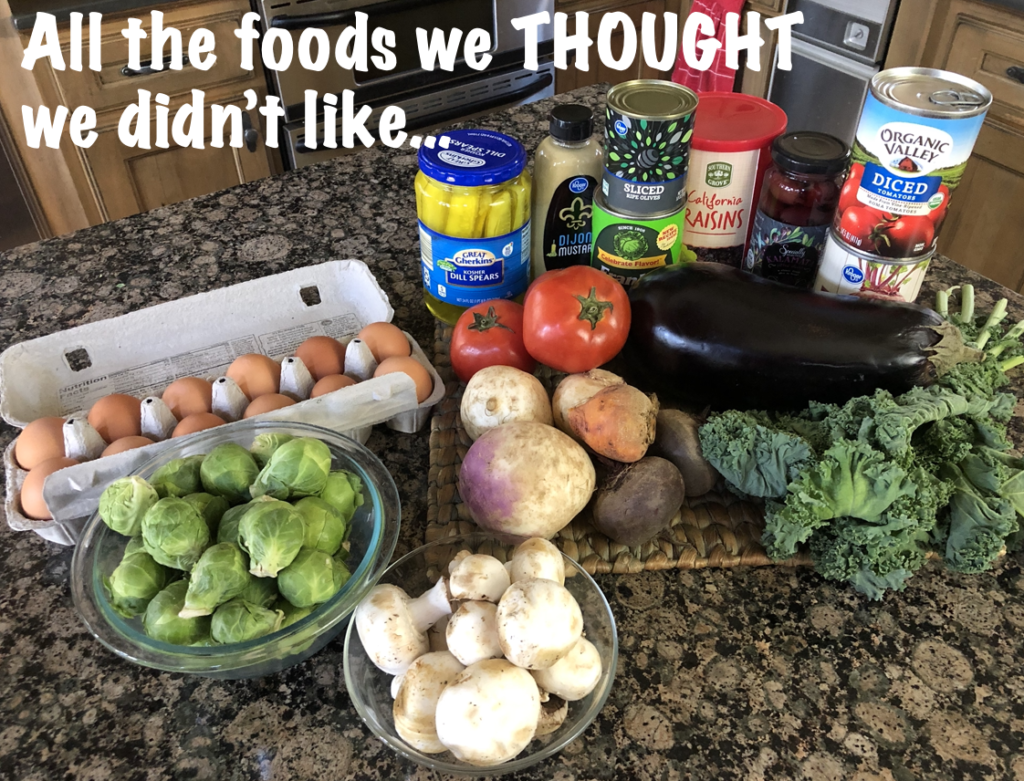
This is a great question. There are SO many. When we first started our REAL food journey, there were plenty of foods we thought we didn’t like. But as our eating habits changed, our taste buds changed too.
One of the biggest surprises for me was coconut. Why coconut? Well, something struck me recently while we were moving my dad into assisted living. A nurse asked if he had any food allergies. He answered emphatically, “coconut!” The nurse asked, “you’re allergic to coconut?” His response? “No, I’m not allergic, I just can’t stand it.”
Suddenly it all made sense. Now I know where my dislike for coconut came from. But today? I LOVE coconut and enjoy adding it to so many recipes.
(We wrote all about coconut in this coaching tip, and more in this coaching tip.)
Scott and I were also longtime mushroom haters. We used to pick mushrooms out of our food and leave them sitting all alone on the side of the plate. But as we shifted toward more REAL foods, we discovered we actually LOVE mushrooms and crave them, along with many other foods we once avoided.
It’s amazing how much your tastes can change when your body gets used to REAL, flavor-loaded foods. We share more about this in our coaching tip Don’t Believe Everything You Think.
There are also foods we once believed were perfectly healthy – but later reconsidered. One example is deli turkey. Turkey sandwiches were a staple for us growing up and even into adulthood. But as we learned more, we realized many of these meats are processed to enhance flavors or improve preservation. This processing increases the risk of cancer and other chronic illnesses over time. Now, it is rare that we will eat deli meats. This of course means we have to be prepared with alternatives, which requires just a little thought and effort. But for us, it’s been worth it. You can learn more about processed meats – along with healthier alternatives – in our coaching tip Does Lunchmeat Really Cause Cancer?
“What are some good high protein breakfasts that aren’t eggs?”
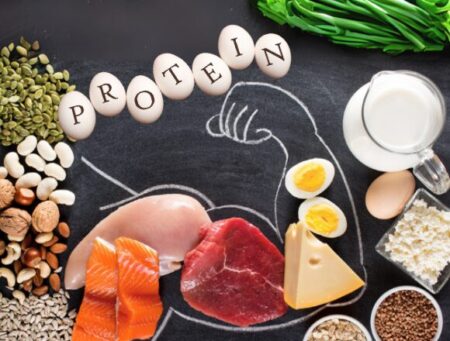
Another great question! The good news is there are plenty of satisfying, protein-rich breakfast options that can help keep you full and energized all morning.
One of the easiest options is Greek yogurt. A bowl topped with berries, nuts, chia seeds, or homemade granola can easily provide 20-30 grams of protein while also adding fiber and healthy fats.
Smoothies are another fantastic option, especially during warmer months. In our Very Berry Smoothie Bowl, you can use tofu, Greek yogurt, or cottage cheese to get a great, flavor-loaded boost of protein to start your day. Adding nut butters and hemp seeds are also easy ways to amp up your protein even more.
Some other easy ideas include:
- Southwest Tofu Scramble
- Sunrise Tofu Scramble
- Make Ahead Muesli
- Chocolate Peanut Butter Overnight Oats
- Power Pancakes or Waffles
- Breakfast burritos (omitting the eggs or using tofu scramble instead)
- Egg Roll in a Bowl
Does that last one sound a little strange? One helpful mindset shift is realizing that breakfast doesn’t have to look like “traditional breakfast food.” Sometimes leftovers from dinner make the most balanced, energizing and satisfying breakfasts of all.
For more on protein, check out our coaching tip Are You Getting Enough Protein?
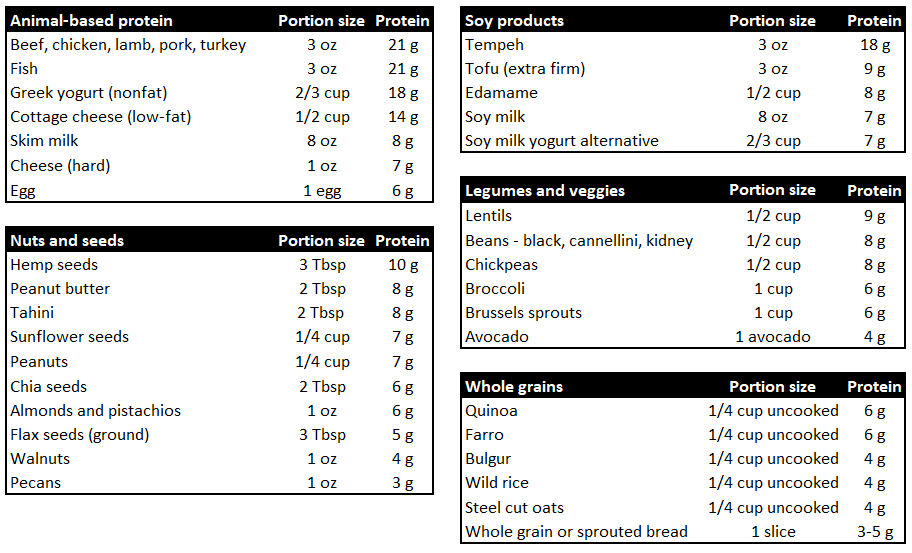
WE HOPE THESE ARE HELPFUL!
Please keep the questions coming!
We love hearing what you’re curious about, confused about, or struggling with – because chances are, other Eat REAL America members are wondering the same thing too.
Send us your questions, and we will try to answer them in a future Ask Us Anything coaching tip!
You are enticing me to be more comfortable going back to some of the yummy recipes containing coconut… ever since Frank received a cardiac calcium score of 1400 (0 is ideal, 400 is bad), I’ve been scared of anything with that much saturated fat. So many vegan “dairy” products are made with coconut, therefore high saturated fat content. However, I’ve found Forager Greek yogurt & sour cream are made with both cashew and coconut and we have been enjoying that. Is coconut anything something I should continue to avoid in our case or can my usual mantra… “all things in moderation” apply?
Oh Dawn, we are sorry for Frank’s high Coronary Calcium score. True, a small amount of unsweetened whole coconut (vs the oil) in moderation is probably acceptable, but it is not encouraged as a regular “health food” or major fat source in someone with a CAC score of 1400.
The preponderance of evidence still favors replacing saturated fats with unsaturated fats whenever possible. And keeping his overall Sat fat grams to below 13 grams per day.
Question for you….since you have been working his diet mostly plant-based for so long, has his score decreased? How is his LDL cholesterol? Has it decreased? Thinking of you!
The good thing about calcified plaque is that it’s stable plaque and won’t break away. The bad news about calcified plaque is that it’s permanent so with 3 blockages of 50-60% it’s really important to keep the soft plaque away. He’s doing well and with the help of meds his LDL is under 50. Diet makes a difference… before we realized he had some trouble, we were already headed toward mostly plants and his LDL was in normal range for the first time as an adult, but still not much below 100. His situation is genetic so meds were recommended by Dr Joel Kahn, “America’s Lifestyle Cardiologist”. Dr Kahn is pleased with his efforts and believes the lower the LDL, the better.
On a side note.. to better understand our eating habits he asked what cookbooks do I use. I mentioned EatRealAmerica & Zonya Foco. Since you’re both MI people (sorry Krista), I asked him if he knew of you… He grinned and replied, “Well yes I do!” Now he knows we’re people that try.
I made the great date paste you suggested! I also did the payday balls that you had the recipe for . I’m wondering if you might provide some more recipes, including the date paste? I know you said you can use it in place of maple syrup or honey, but I’m not sure if that’s one-to-one or how it would work. So I would really appreciate recipes with date paste. I think it’s a great option for sweetener.😊💕Thank you very much!
Hi Jane! SOOO glad you made the date paste and are “hooked” on it like we are. Because of it’s fiber and moisture content, think of it as being only “half” as sweet as sugar, honey or maple syrup. So in any recipe calling for say 1/4 cup of either of those, use 1/2 cup of date paste. Obviously sometimes the “liquid” MIGHT need accounted for, but actually, not often. Just sub it 2 parts date paste to 1! We’ve had success with both of the Chocolate Oat Squares and Oatmeal Chocolate Chip Granola Bars, all the breakfast cookies, overnight oats, oatmeal cups, muffins, baked oatmeal, Frozen Strawberry Yogurt Bites, and Chocolate Citrus Bliss. Have FUN!!!