
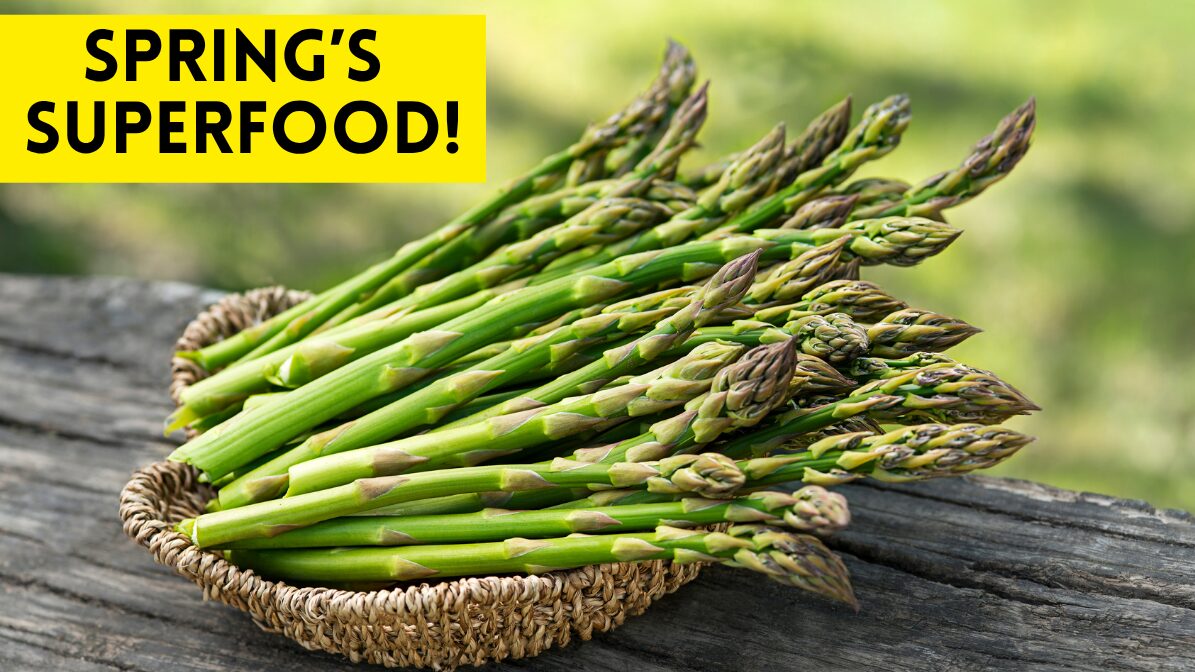
Can you guess which vegetable was once proclaimed the “king of vegetables,” can help reduce the risk of birth defects for pregnant women, helps manage PMS symptoms, prevents progression of cataracts and even fights cancer?
Sound too good to be true?
Believe it or not…it’s asparagus!
With asparagus season right around the corner, now is the perfect time to rediscover (or finally discover!) just how amazing this vegetable can be.
Maybe you already love it. Maybe you’ve tried it and weren’t impressed. Or maybe it’s still sitting in the “I’m pretty sure I don’t like it” category. Wherever you are, we want to give you some ideas and inspiration to enjoy this incredible spring veggie!
Watch this video below to see how easy it is to prepare our Asparagus with Catalan Vinaigrette!

From Ancient Medicine to Modern Superfood
Asparagus has been around for a very long time – over 2,500 years. It was first cultivated in ancient Greece, where it was valued not just as food, but also as medicine. And interestingly…modern nutrition science is catching up to what they already believed.
Even better?
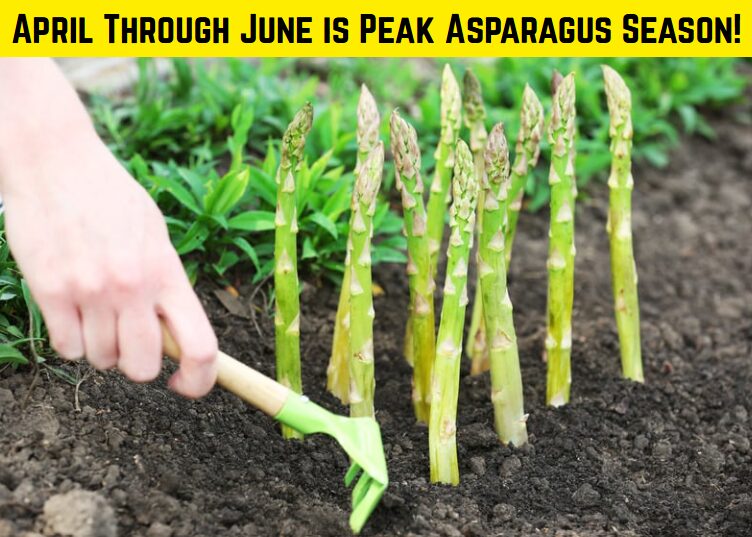
It’s a perennial plant – meaning once it’s established, it comes back year after year. A single planting can produce for 15+ years, with fresh spears popping up every spring.
The asparagus season is April through June, depending on where you live. Early in the season, asparagus is picked every 4-5 days. Then, as the temperatures get warmer, the spears grow faster…several inches in a single day! At its peak, it often has to be harvested every day.
Much of the asparagus in U.S. grocery stores is imported (often from Peru and Mexico). Of course, many local farmers grow asparagus and sell it at farmers’ markets or through local co-ops. Fresh, in-season asparagus from a local farm
- Tastes sweeter and more vibrant
- Has better texture (no limp spears!)
- Was likely harvested within 24 hours
No surprise…we HIGHLY RECOMMEND buying in-season asparagus from your local farmers!
Why asparagus?

If you look at nutrients per calorie, asparagus is one of the most nutrient-dense foods you can eat. Here’s what makes it stand out:
- Good for digestion – contains fiber and prebiotics that feed beneficial gut bacteria
- High in antioxidants – including glutathione, often called the body’s “master detoxifier”
- Folate powerhouse – essential for pregnancy and cellular health
- Supports heart health – thanks to potassium and anti-inflammatory compounds
- Rich in vitamins – especially Vitamins K, C, E, and B vitamins
And all of that comes in at around 20 calories per serving.
How to Choose the Freshest Asparagus

Keep it simple:
- Look for bright green stalks with tight, compact tips
- Avoid anything wilted or limp
- Give it a little bend – it should feel firm and snap easily
You might also see:
- Purple asparagus – slightly sweeter, turns green when cooked
- White asparagus – grown without sunlight, milder flavor
How do you store it?
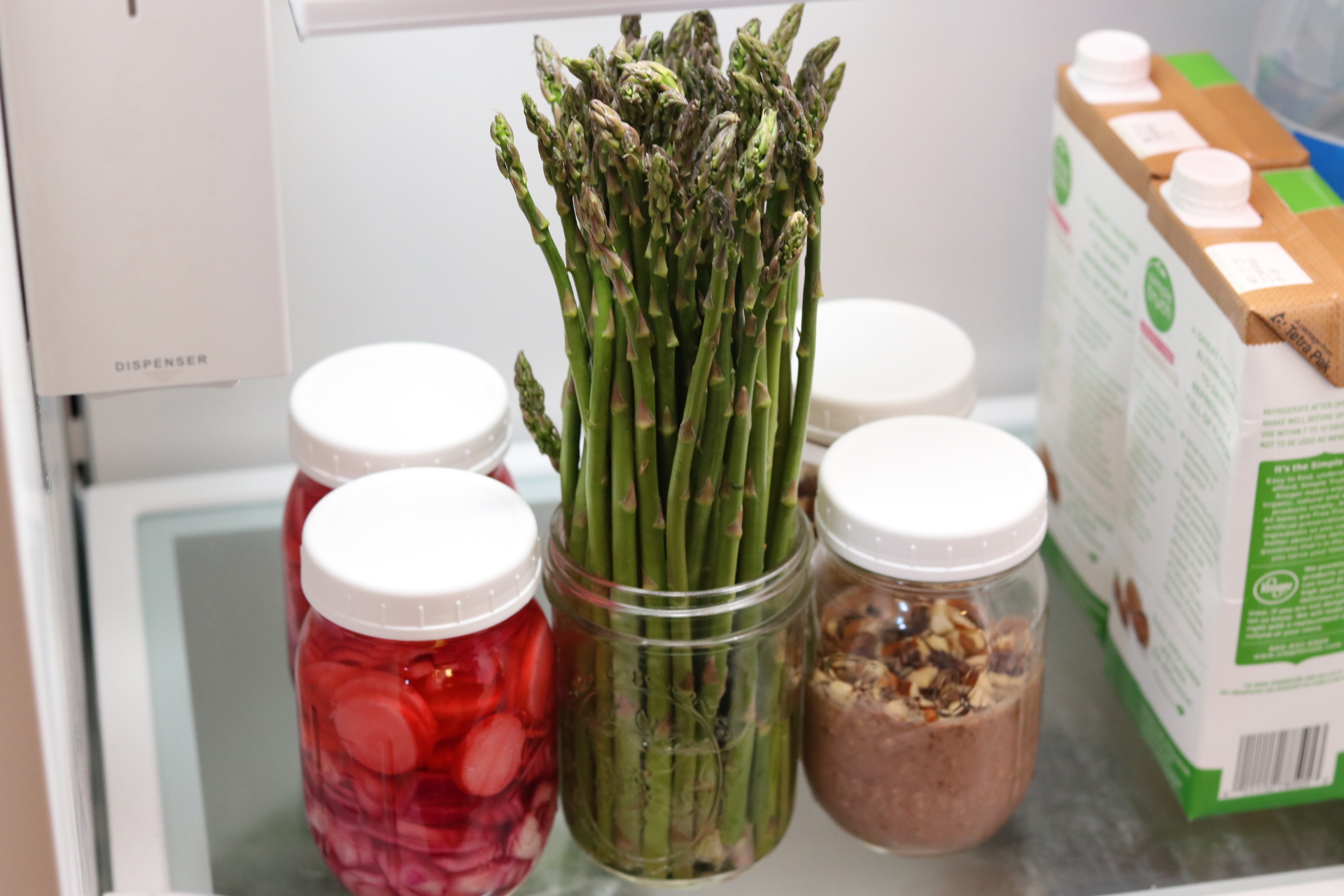
When we learned to treat asparagus more like fresh flowers to keep it fresh, this was a game-changer:
- Keep the bunch intact
- Trim the stem ends if they’re dry
- Stand upright in a jar, cup, or bowl with about 1 inch of water
- Loosely cover the tops (optional)
- Store in the refrigerator until ready to use!
This keeps it fresh and crisp for at least a week – usually more.
How to Prepare It – Where the Magic Happens
If you think you don’t like asparagus…there’s a good chance you just haven’t had it prepared the right way yet. Two of the easiest, most game-changing methods are roasting (brings out a slightly nutty, rich flavor) and grilling (adds a smoky depth). Other great options include lightly sautéing, steaming (just don’t overdo it!), or shaving raw into salads.
The key: don’t overcook it. You want it crisp tender – not mushy.
Here are just a few incredibly delicious ways to enjoy fresh, in-season asparagus!
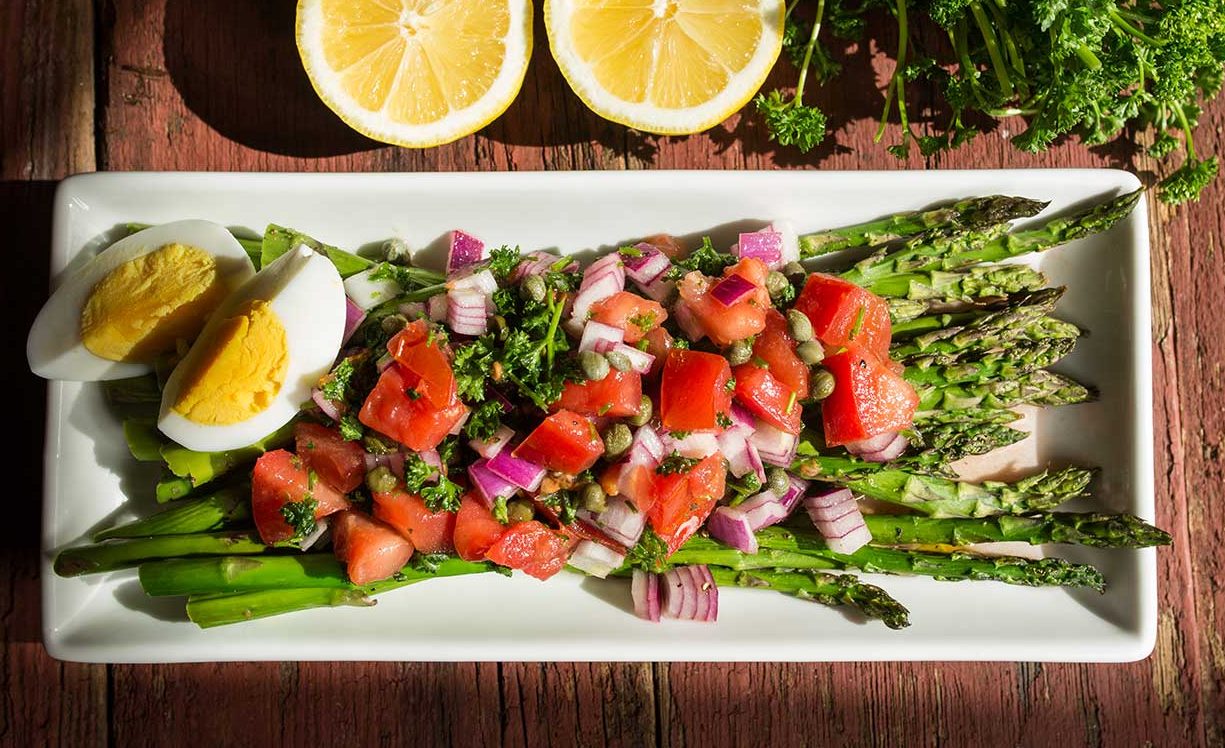
- Asparagus with Catalan Vinaigrette
- Spring Asparagus Farro Salad
- Savory & Simple Roasted Asparagus
- Springtime Strawberry Couscous Salad
- Caesar Style Grilled (or Roasted) Asparagus
- Spring Inspired Cobb Salad
- Lamb Meatballs with Mint Pesto Pasta
- Veggie Skillet Lasagna
- Green Shakshuka
- Asparagus Lentil Salad
- Simple Roasted Asparagus & Mushrooms
- Shallot, Asparagus & Sun-Dried Tomato Pizza
- Curried Asparagus & Chickpeas
- Egg-Topped Roasted Asparagus & Strawberries
- Shaved Asparagus Pizza
- Roasted Strawberry & Asparagus Salad
- Kale & Asparagus Farro Salad
- Roasted Chickpea & Asparagus Potato Salad
- Hearts of Palm, Jicama & Asparagus Salad
- Lamb Crostini with Asparagus Gremolata
- Asparagus Stuffed Sweet Potato
- Spring Vegetable Orzo Pasta Salad
- Greek Style Frittata
…and so many more!
Yes…We’re Going There: “Asparagus Pee”
Let’s address it. That distinct smell some people notice after eating asparagus? Totally normal.
It comes from natural sulfur compounds that break down during digestion. Here’s the part you may not know:
- Some people produce it
- Some people can’t smell it
- Some both…some neither
Either way – it’s harmless. Just a quirky little side effect of a very health food!
Your April Challenge
Challenge yourself to enjoy asparagus at least once a week this month. Try it a different way each time. Get your family involved and vote: keeper or sleeper?!
You taught us to love fresh asparagus! Now we anxiously wait for it to come into season each year! So many amazing recipes to make with it 😃
Awesome. Plan to add it regularly this spring.
Love to saute lots of garlic with olive oil and add the asparagus and a little squeezed lemon