

We get A LOT of questions about portion sizes.
Do you ever wonder if eating healthfully would feel easier to manage if you could just “get the portions right?”
Or maybe you’re not even sure what a normal portion looks like anymore.
Here’s the good news: When you focus on nutrient-rich REAL food, your body is actually designed to help regulate portion sizes naturally. Foods rich in protein, fiber, water, and nutrients help you feel satisfied sooner – which means you naturally stop before overeating.
In the documentary, “Fed Up,” Dr. Mark Hyman said it well. When recommending the most powerful thing people can do for themselves and their families, the advice was simple: “EAT REAL FOOD!” When a mom asked how much of this REAL food they could eat, Dr. Hyman said, “When you eat food with a lot of nutrients and fiber…it’s going to make you full before it will make you fat.” When this family followed this guidance, they lost a combined 124 pounds in 6 months!
Why Portion Sizes Feel So Hard Today
Most of us aren’t struggling because we lack discipline. We’re living in an environment filled with:
- ultra-processed foods engineered to keep us eating (and craving more)
- oversized restaurant portions (which have “migrated” into our home portions, because that is what seems normal)
- distracted eating (screens, multitasking, rushing)
- stress and busy schedules
And when we eat quickly or distractedly, we often miss the signals that tell us we’re satisfied.
The REAL Food Advantage
One of the biggest benefits of eating REAL food is that is works with your biology:
- Fiber slows digestion
- Protein increases fullness
- Volume from vegetables fills your plate (and your stomach)
- Nutrients like magnesium prevent salt cravings (which happens when we miss the mark)
- Fewer highly processed ingredients mean fewer cravings later
This is why so many people notice that when they focus on whole REAL foods, they are relieved to find they can stop obsessing over portions.
With that being said, it can be helpful to have a guideline for how much to put on our plates, particularly for certain foods like nuts, oils, meats, bread and pasta. Here are some easy “rules of thumb” to help set your plate up for success!
Helpful Portion Visuals
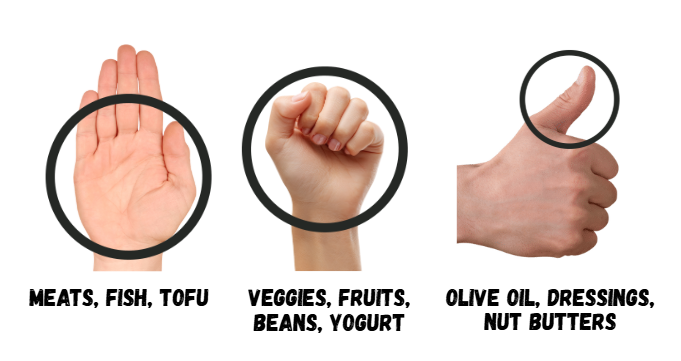
Think of these as starting points. They aren’t rigid rules – just helpful guides when you need them.
- Palm of your hand: protein (fish, chicken, beef, tofu)
- Closed fist: about 1 cup (vegetables, fruits, yogurt, soups, beans)
- Thumb: about 1 tablespoon (nut butters, olive oil, dressings)
- Fingertip: about 1 teaspoon (butter, spreads)
- Handful: roughly 1 to 2 ounces (nuts, dried fruits, snacks)
Remember: your body size, activity level, and hunger all matter.
Load Up on Greens (and Other Veggies)
Think of vegetables as a minimum, not a maximum.
Dark leafy greens and colorful vegetables provide fiber, vitamins, minerals, and volume that helps you feel satisfied. A great goal is to build meals that feature vegetables first, with protein and healthy fats alongside them. Don’t limit yourself to only 1 or 2 cup portions of these nutrient-rich veggies...the goal should be to enjoy aim for 8-10 fist size servings of veggies and fruits daily, focusing on variety!
Like “Dr. B” Says
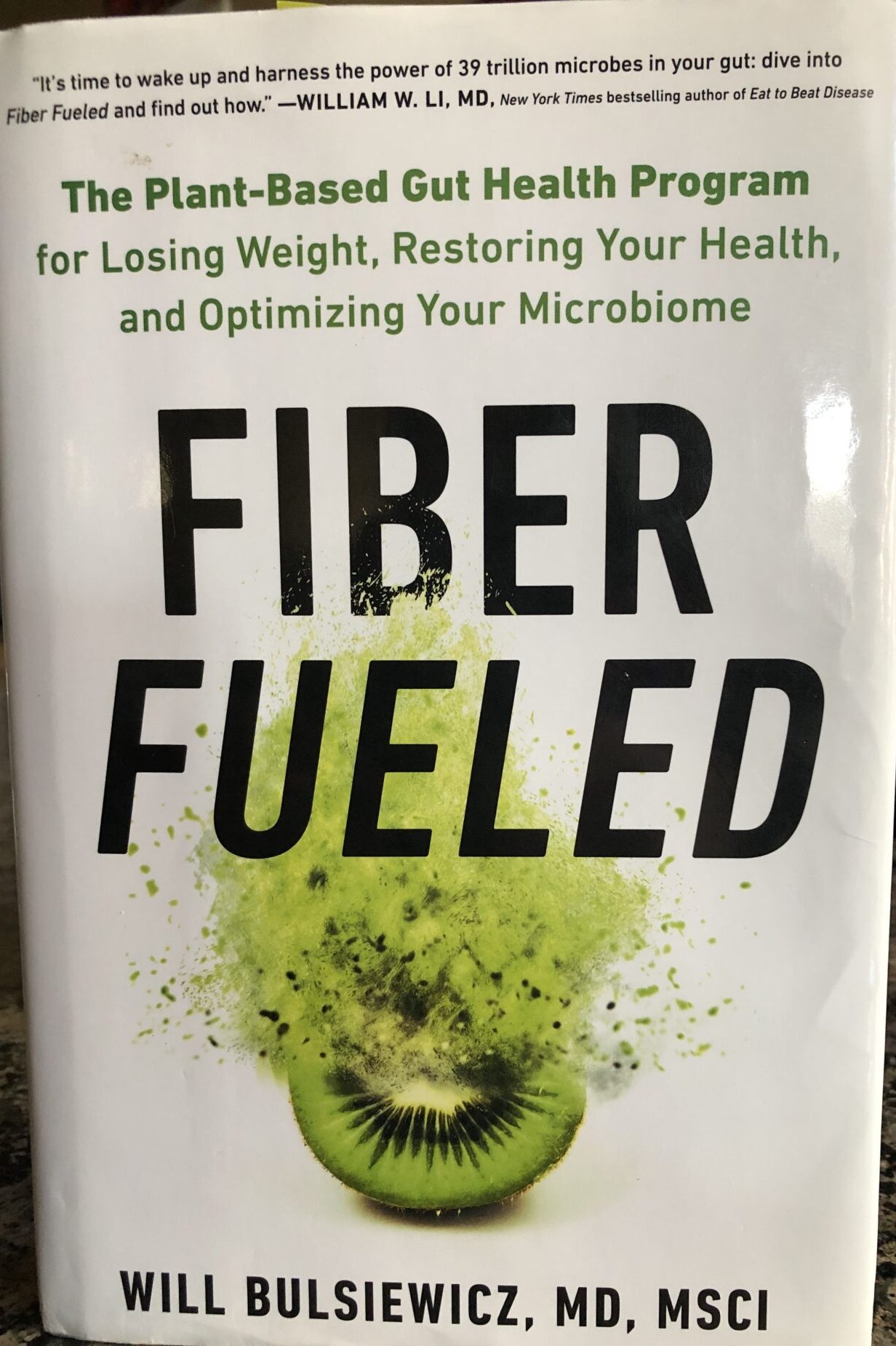
In his book, Fiber Fueled, Dr. Will Bulsiewicz says, “Let me make this incredibly simple: When you reach for whole plant foods, you can eat WITHOUT RESTRICTION. No exaggeration, you have my green light to eat as much as you want.”
He explains further:
Thank the fiber and resistant starch. Whole plant foods are by definition high nutrient, low calorie. There is the requirement to actually chew them; you can’t just inhale them…By taking our time to chew fiber-rich food, we are allowing our body to use its natural mechanisms to tell us when we’ve had enough. No need to count calories. Mother Nature is counting them for you. You’ll feel full and satisfied, and know that it’s been enough. And it will be a meal jam-packed with nutrients and fiber.
Practical Tips That Make Portion Sizes Easier
- Slow down enough to notice when you are satisfied. It takes time for your brain and stomach to communicate with each other. Try pausing halfway through your meal and checking in on how you feel. And before going back for seconds, spend a few minutes talking to your family and friends, and then see if you’re still hungry.
- Avoid eating straight from containers. Serve yourself a reasonable portion on a plate or in a bowl instead.
- Find bowls, plates and “on-the-go” containers. These can help you maintain good portion sizes. We use large bowls for salads and small plates for main dishes and sides. Or we use a large plate and fill at least half of it with salad and veggies. Coffee mugs are great for soups and ice cream!
- Build meals, not snacks. Meals with protein and fiber will help reduce cravings and grazing in between meals. Then, have healthy snacks readily available in case you do need something to keep your energy up.
- Make veggies the star. Stir-fries, big salads, soups, and sheet-pan meals help to naturally balance portions.
- Veggie to pasta ratio. To keep from going overboard with pasta, eat 2 parts veggies to 1 part pasta. And when it’s whole-grain pasta, the additional fiber functions like a built-in “fill you up” portion regulator.
- Pizza Code of Conduct. Pizza is delicious – and easy to overdo. Loading your pizza with veggies and other REAL ingredients helps. The other trick? Always enjoy your pizza with a BIG salad first. Then, a moderate slice or two of pizza will seem like the perfect portion.
Yes, You Can Still Eat Out Occasionally

It’s no secret that restaurant portions are often huge!
Many restaurant meals contain more than a full day’s worth of sodium and far more food than most of us need at one sitting. This is why we prefer to eat meals prepared at home whenever possible. With most Eat REAL America meals, you could eat a double-serving and your calories, carbs, and sodium would be well below the restaurant version. Plus, you would be plenty full before you finished the second serving!
When eating out, try these simple strategies:
- Share a salad and an entree
- Box up half of your meal before eating
- Start with a salad or veggies first
- Avoid buffets (unless it is a salad bar that looks like a rainbow of veggies, fruits, beans, nuts and seeds)
The Real Goal: Trust Your Body Again
The goal is to get to the point where portion sizes don’t feel like math homework:
- Eat REAL food most of the time
- Slow down and enjoy it
- Stop when you feel satisfied – not stuffed
If you want to count anything, count 8-10 servings of veggies and fruits every day…and 30 different varieties of plants every week (vegetables, fruits, legumes, nuts, seeds, whole grains, herbs and spices).
Thanks for the introduction to Dr. B. Read the above book, purchased a thriftbooks cookbook by Dr. B, and continued to read his new book. Tons and tons of good info.
Thanks again!
Dee